Illustrations, Fiction, and the Autobiographical: a Writerly Reading of That Scatterbrain Booky
Does reading fiction make us better people?
(Image credit:
Getty Images
)

Reading fiction has been said to increase people'south empathy and pity. Only does the research actually carry that out?
Textual Healing is a season that explores the benefits of reading for mental health. Look out for stories on BBC Civilization, BBC Reel and BBC Future and join BBC Culture'southward Facebook grouping Textual Healing for more.
Every 24-hour interval more than i.8 million books are sold in the United states of america and another half a 1000000 books are sold in the United kingdom of great britain and northern ireland. Despite all the other easy distractions available to us today, in that location'southward no doubt that many people all the same love reading. Books can teach u.s. enough most the globe, of course, likewise as improving our vocabularies and writing skills. But can fiction also make united states better people?
The claims for fiction are bully. Information technology's been credited with everything from an increment in volunteering and charitable giving to the tendency to vote – and even with the gradual decrease in violence over the centuries.
Characters claw us into stories. Aristotle said that when we lookout a tragedy two emotions predominate: pity (for the grapheme) and fear (for yourself). Without necessarily even noticing, we imagine what information technology's like to be them and compare their reactions to situations with how nosotros responded in the past, or imagine we might in the future.
You might also similar:
• Can reading improve your mental health?
• How feeling bad changes the encephalon
• The amazing benefits of being bilingual
This exercise in perspective-taking is like a training course in understanding others. The Canadian cerebral psychologist Keith Oatley calls fiction "the mind's flight simulator". Only as pilots tin can do flying without leaving the footing, people who read fiction may improve their social skills each time they open a novel. In his research, he has found that every bit nosotros brainstorm to place with the characters, we first to consider their goals and desires instead of our own. When they are in danger, our hearts start to race. We might fifty-fifty gasp. Just we read with luxury of knowing that none of this is happening to united states. We don't wet ourselves with terror or jump out of windows to escape.
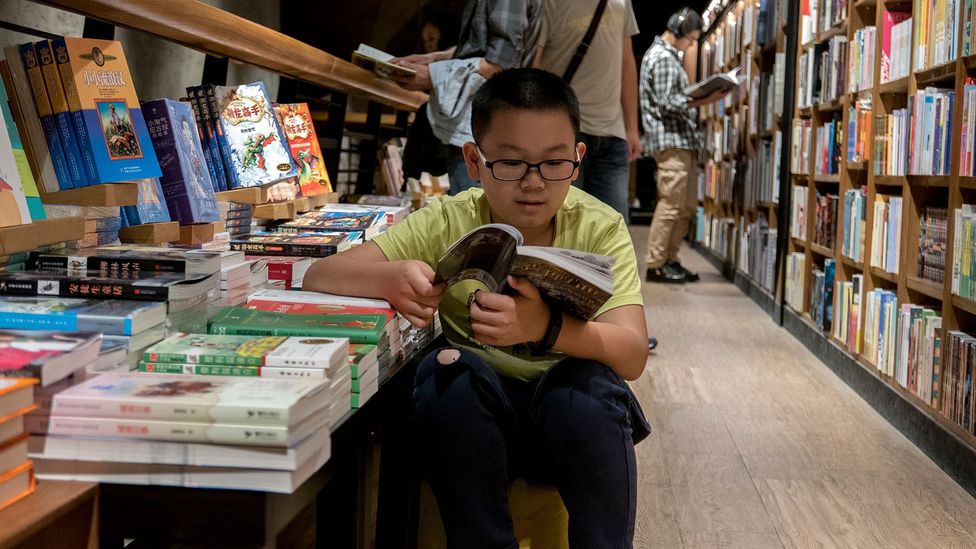
Fiction has been chosen "the mind's flight simulator" (Credit: Getty Images)
Having said that, some of the neural mechanisms the brain uses to make sense of narratives in stories do share similarities with those used in real-life situations. If we read the word "kicking", for example, areas of the brain related to physically kicking are activated. If we read that a character pulled a light cord, activity increases in the region of the brain associated with grasping.
To follow a plot, we need to know who knows what, how they feel nearly it and what each grapheme believes others might be thinking. This requires the skill known every bit "theory of listen". When people read about a character'due south thoughts, areas of the brain associated with theory of mind are activated.
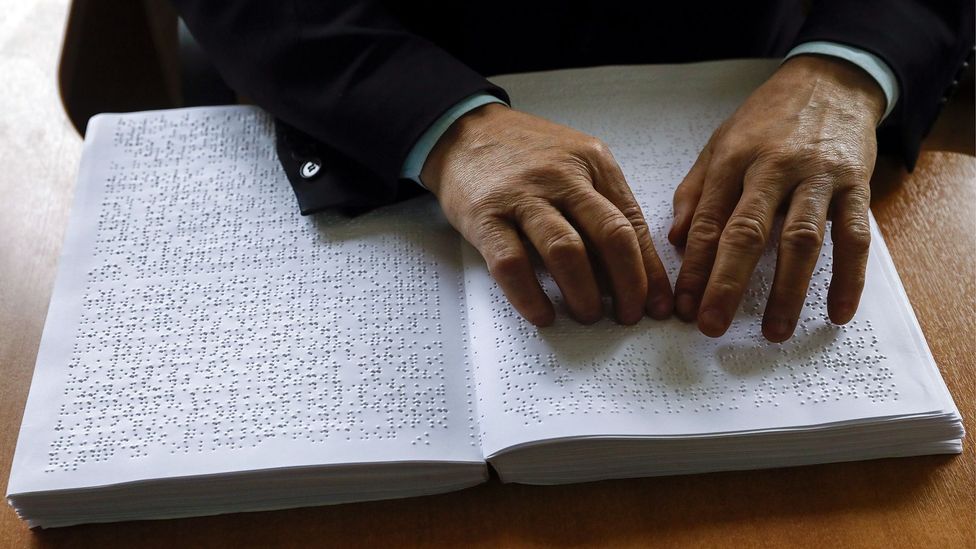
When people read about a character'due south thoughts, areas of the brain associated with theory of listen are activated (Credit: Getty Images)
With all this practise in empathising with other people through reading, y'all would call up information technology would exist possible to demonstrate that those who read fiction have better social skills than those who read mostly non-fiction or don't read at all.
The difficulty with conducting this kind of inquiry is that many of us accept a tendency to exaggerate the number of books we've read. To go around this, Oatley and colleagues gave students a list of fiction and non-fiction writers and asked them to bespeak which writers they had heard of. They warned them that a few fake names had been thrown in to check they weren't lying. The number of writers people have heard of turns out to be a good proxy for how much they actually read.
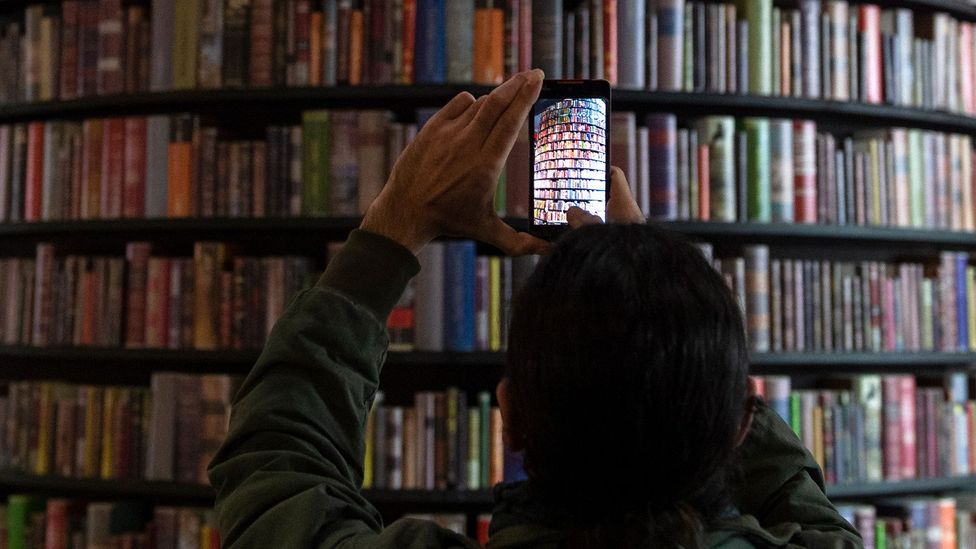
Many of us tend to exaggerate the number of books we've read (Credit: Getty Images)
Next, Oatley's squad gave people the "Mind in the Eyes" test, where you are given a series of photographs of pairs of eyes. From the eyes and surrounding skin alone, your task is to divine which emotion a person is feeling. Yous are given a short listing of options like shy, guilty, daydreaming or worried. The expressions are subtle and at first glance might appear neutral, and so information technology'southward harder than it sounds. But those deemed to have read more fiction than non-fiction scored higher on this test – as well as on a scale measuring interpersonal sensitivity.
At the Princeton Social Neuroscience Lab, psychologist Diana Tamir has demonstrated that people who oft read fiction have improve social cognition. In other words, they're more skilled at working out what other people are thinking and feeling. Using brain scans, she has found that while reading fiction, there is more than activity in parts of the default mode network of the encephalon that are involved in simulating what other people are thinking.

People who often read fiction have greater social cognition (Credit: Getty Images)
People who read novels appear to exist ameliorate than average at reading other people'southward emotions, but does that necessarily make them ameliorate people? To test this, researchers at used a method many a psychology student has tried at some bespeak, where you lot "accidentally" driblet a agglomeration of pens on the floor and so meet who offers to help you lot gather them up. Before the pen-drop took identify participants were given a mood questionnaire interspersed with questions measuring empathy. Then they read a short story and answered a series of questions virtually to the extent they had felt transported while reading the story. Did they have a bright mental pic of the characters? Did they want to learn more most the characters later on they'd finished the story?
The experimenters then said they needed to fetch something from another room and, oops, dropped six pens on the way out. It worked: the people who felt the most transported past the story and expressed the most empathy for the characters were more probable to help recall the pens.
Y'all might be wondering whether the people who cared the most about the characters in the story were the kinder people in the beginning place – as in, the type of people who would offer to assist others. But the authors of the study took into account people's scores for empathy and found that, regardless, those who were virtually transported by the story behaved more than altruistically.
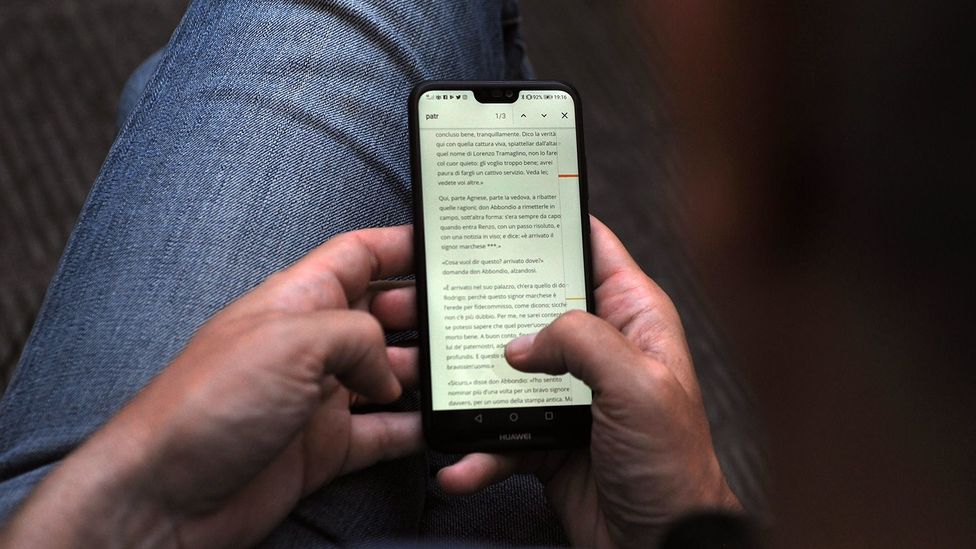
In i experiment, people who felt about transported by a story later behaved more altruistically (Credit: Getty Images)
Of class, experiments are ane thing. Earlier nosotros extrapolate to wider gild we demand to be careful most the direction of causality. In that location is always the possibility that in real life, people who are more empathic in the offset place are more than interested in other people's interior lives and that this interest draws them towards reading fiction. It'southward not an like shooting fish in a barrel topic to research: the platonic report would involving measuring people's empathy levels, randomly allocating them either to read numerous novels or none at all for many years, and then measuring their empathy levels over again to come across whether reading novels had made whatever difference.
Instead, short-term studies have been done. For instance, Dutch researchers arranged for students to read either paper articles about riots in Hellenic republic and liberation day in kingdom of the netherlands or the offset chapter from Nobel Prize winner Jose Saramago'due south novel Blindness. In this story, a man is waiting in his car at traffic lights when he suddenly goes blind. His passengers bring him home and a passer-by promises to drive his car home for him, but instead he steals it. When students read the story, non merely did their empathy levels ascent immediately afterwards, simply provided they had felt emotionally transported past the story, a week afterwards they scored even higher on empathy than they did right after reading.
Of course, you could argue that fiction isn't alone in this. We tin can empathise with people we see in news stories likewise, and hopefully we ofttimes practise. Only fiction has at least three advantages. Nosotros have access to the grapheme's interior world in a mode we usually do not with journalism, and we are more probable to willingly append disbelief without questioning the veracity of what people are saying. Finally, novels allow the states to do something that is hard to exercise in our own lives, which is to view a character's life over many years.
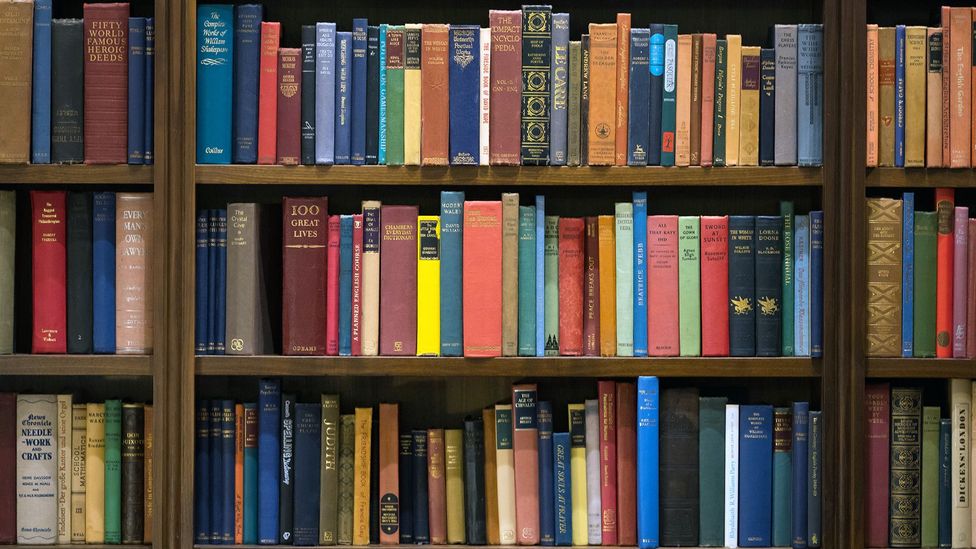
Some institutions consider reading to be so significant that they include modules on literature (Credit: Getty Images)
So the research shows that perhaps reading fiction does brand people behave better. Certainly some institutions consider the effects of reading to be and so significant that they now include modules on literature. At the Academy of California Irvine, for example, Johanna Shapiro from the Department of Family Medicine firmly believes that reading fiction results in improve doctors and has led the establishment of a humanities programme to train medical students.
It sounds equally though it's time to lose the stereotype of the shy bookworm whose nose is always in a volume considering they find information technology difficult to bargain with real people. In fact, these bookworms might be better than everyone else at understanding homo beings.
Textual Healingis a season that explores the benefits of reading for mental health. Wait out for stories on BBC Culture, BBC Reel and BBC Future and join BBC Civilization'southward Facebook group Textual Healingfor more than.
Join more than ane 1000000 Future fans past liking us on Facebook , or follow the states on Twitter or Instagram .
If yous liked this story, sign up for the weekly bbc.com features newsletter , called "If Yous Just Read six Things This Week". A handpicked choice of stories from BBC Future, Culture, Capital, and Travel, delivered to your inbox every Friday.
Source: https://www.bbc.com/future/article/20190523-does-reading-fiction-make-us-better-people
0 Response to "Illustrations, Fiction, and the Autobiographical: a Writerly Reading of That Scatterbrain Booky"
Post a Comment