Make America Green Again Healthy Planet
"This report is a dire alert nearly the consequences of inaction," said Hoesung Lee, Chair of the Intergovernmental Panel on Climate Change (IPCC).
"It shows that climatic change is a grave and mounting threat to our wellbeing and a salubrious planet. Our actions today will shape how people adapt and nature responds to increasing climate risks," he said, adding: "One-half measures are no longer an selection."
According to the report, human-induced climate modify is causing dangerous and widespread disruption in nature and affecting billions of lives all over the world, despite efforts to reduce the risks, with people and ecosystems to the lowest degree able to cope beingness hardest striking.
This is the second in a series of three reports from the the UN's tiptop climate scientists and its launch comes simply over 100 days since the UN climate action summit in Glasgow, COP26, agreed to pace up activity to limit global warming to 1.five°C and stave off the worst furnishings of climatic change.
UN Secretary-General António Guterres called the first study, issued last August, a "code reddish for humanity", and said that "If nosotros combine forces now, we can avert climate ending."
'Clobbered by climate change'
His take on the latest report is equally stark: he laments that the show detailed by IPCC is unlike anything he has always seen, calling it an "atlas of human suffering and a damning indictment of failed climate leadership."
With fact upon fact, this report, which focuses on impacts, adaptation and vulnerability, reveals how people, and the planet, are getting "clobbered" by climate change.
"Nearly one-half of humanity is living in the danger zone – now. Many ecosystems are at the point of no return – now. Unchecked carbon pollution is forcing the world's almost vulnerable on a frog march to destruction – now," he declared.
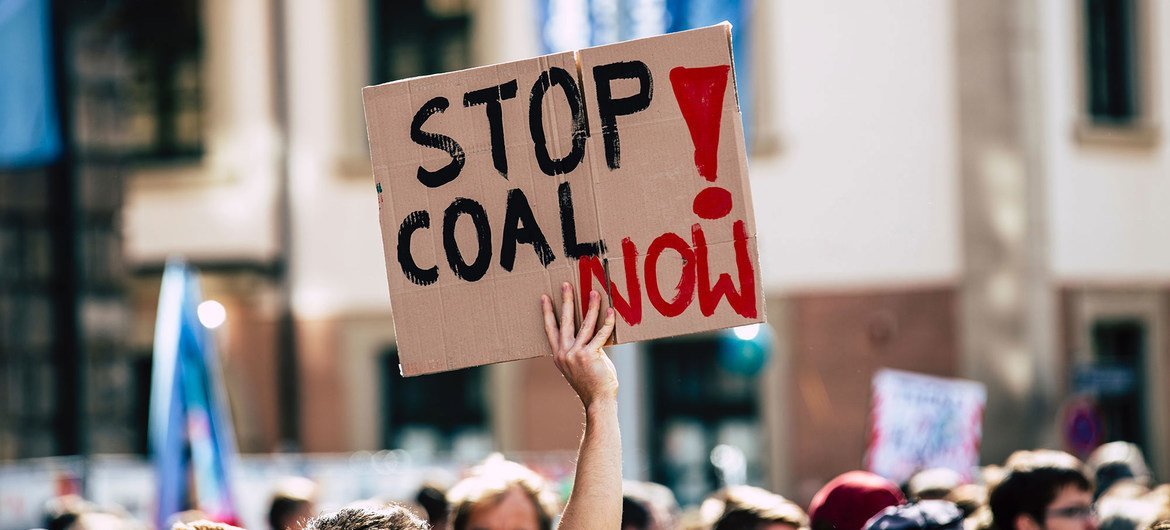
Coal is one of the big drivers of carbon emissions.
Criminal abdication of leadership
Mr. Guterres said the world's biggest polluters are guilty of arson of our only dwelling house.
In the face of such dire bear witness, it is essential to meet the goal of limiting global temperature rising to ane.5 degrees, and the science shows that will crave the globe to cut emissions by 45 percent by 2030 and reach net cipher emissions by 2050.
"But according to current commitments, global emissions are set to increment almost xiv per cent over the current decade. That spells catastrophe. It will destroy any chance of keeping 1.5 live," said the UN principal.
1 of the report'due south core truths is that coal and other fossil fuels are choking humanity, the Secretary-General explained, calling on all G20 governments to alive up to their agreements to terminate funding coal abroad, and the must now urgently do the same at home and dismantle their coal fleets.
Moreover, he said that oil and gas giants – and their underwriters – are as well on notice. "You cannot claim to be light-green while your plans and projects undermine the 2050 net-zero target and ignore the major emissions cuts that must occur this decade. People meet through this smokescreen."
Instead of slowing downward the decarbonization of the global economy, now is the time to advance the energy transition to a renewable energy future, he said declaring fossil fuels a "expressionless end for our planet, for humanity, and yes, for economies," and calling for developed countries, Multilateral Development Banks, individual financiers and others to class coalitions to help major emerging economies end the use of coal.
See full remarks here
Adaptation saves lives
The second core finding from he IPCC report is slightly better news: investments in adaptation work.
"As climate impacts worsen – and they will – scaling up investments will be essential for survival. Adaptation and mitigation must be pursued with equal force and urgency. That's why I take been pushing to get to 50 per cent of all climate finance for accommodation," Mr. Guterres explained.
Noting that the Glasgow commitment on accommodation funding is clearly not plenty to meet the challenges faced by nations on the frontlines of the climate crisis he said that he is also pressing to remove the obstacles that prevent small island states and least developed countries from getting the finance they desperately demand to save lives and livelihoods.
Delay means death
"We need new eligibility systems to deal with this new reality. Delay means death," he said.
Saying that he is taking inspiration from all those on the frontlines of the climate battle fighting back with solutions, the Secretary-General said that he knew people everywhere were anxious and aroused.
"I am, too. Now is the fourth dimension to turn rage into action. Every fraction of a caste matters. Every voice tin make a deviation. And every second counts.
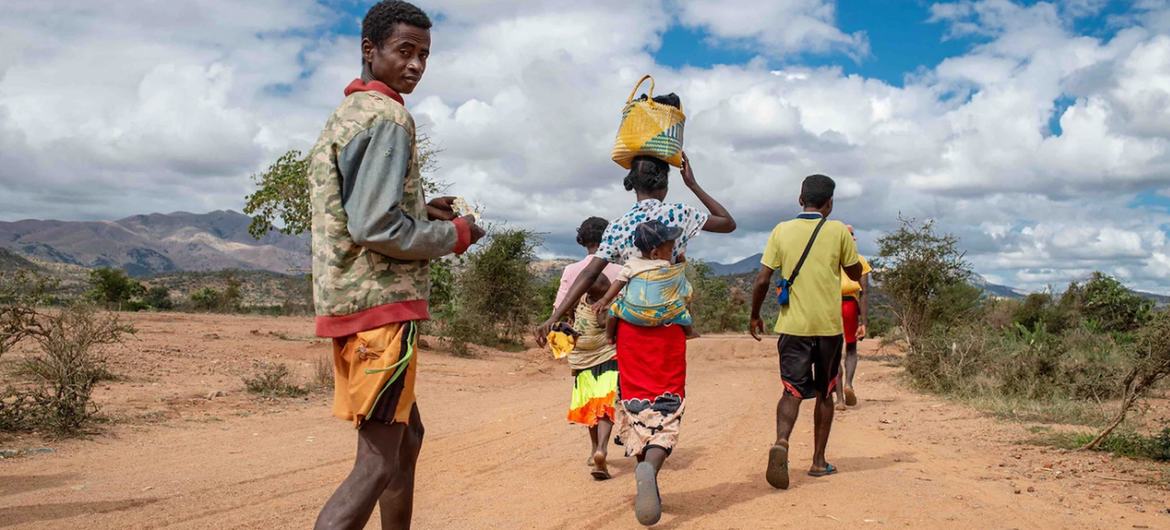
People on their way domicile in Behara, Amboassary district in Madagascar'south Yard Sud region, which is experiencing a historic drought.
Urgent activeness to tackle increasing risks
The IPCC says that increased heatwaves, droughts and floods are already exceeding plants' and animals' tolerance thresholds, driving mass mortalities in species such as trees and corals. These weather extremes are occurring simultaneously, causing cascading impacts that are increasingly difficult to manage.
They accept exposed millions of people to acute food and water insecurity, especially in Africa, Asia, Central and South America, on Modest Islands and in the Arctic.
To avert mounting loss of life, biodiversity and infrastructure, ambitious, accelerated action is required to adapt to climate alter, at the same fourth dimension as making rapid, deep cuts in greenhouse gas emissions.
So far, progress on adaptation is uneven and at that place are increasing gaps betwixt action taken and what is needed to deal with the increasing risks, the new report finds. These gaps are largest among lower-income populations.
"This report recognizes the interdependence of climate, biodiversity and people and integrates natural, social and economic sciences more strongly than earlier IPCC assessments," said Hoesung Lee.
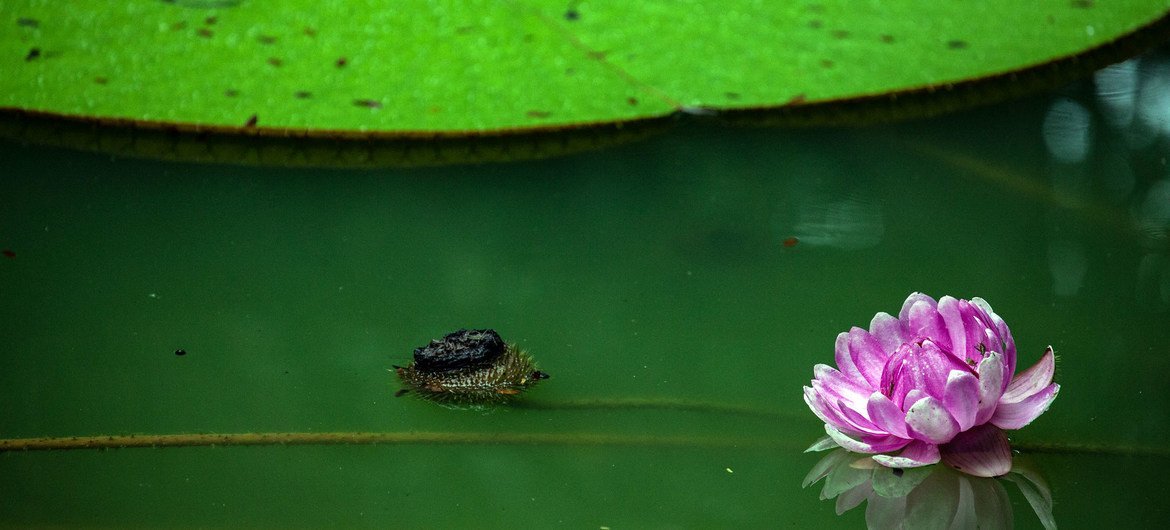
A lake inside an Amazon rainforest within the metropolis of Manaus, Brazil.
'Permit nature do its job'
There are options to arrange to a changing climate. This report provides new insights into nature'south potential non only to reduce climate risks but as well to better people'south lives, the IPCC says.
"Healthy ecosystems are more resilient to climate change and provide life-critical services such equally food and clean h2o", said IPCC Working Grouping Two Co-Chair Hans-Otto Pörtner.
"By restoring degraded ecosystems and effectively and equitably conserving thirty to 50 per cent of World'south land, freshwater and ocean habitats, society tin can benefit from nature'south capacity to absorb and store carbon, and nosotros can accelerate progress towards sustainable development, but adequate finance and political back up are essential."
Scientists point out that climatic change interacts with global trends such as unsustainable use of natural resources, growing urbanization, social inequalities, losses and damages from extreme events and a pandemic, jeopardizing future development.
"Our assessment clearly shows that tackling all these different challenges involves everyone – governments, the private sector, civil club – working together to prioritize risk reduction, as well every bit equity and justice, in decision-making and investment," said IPCC Working Grouping II Co-Chair Debra Roberts.
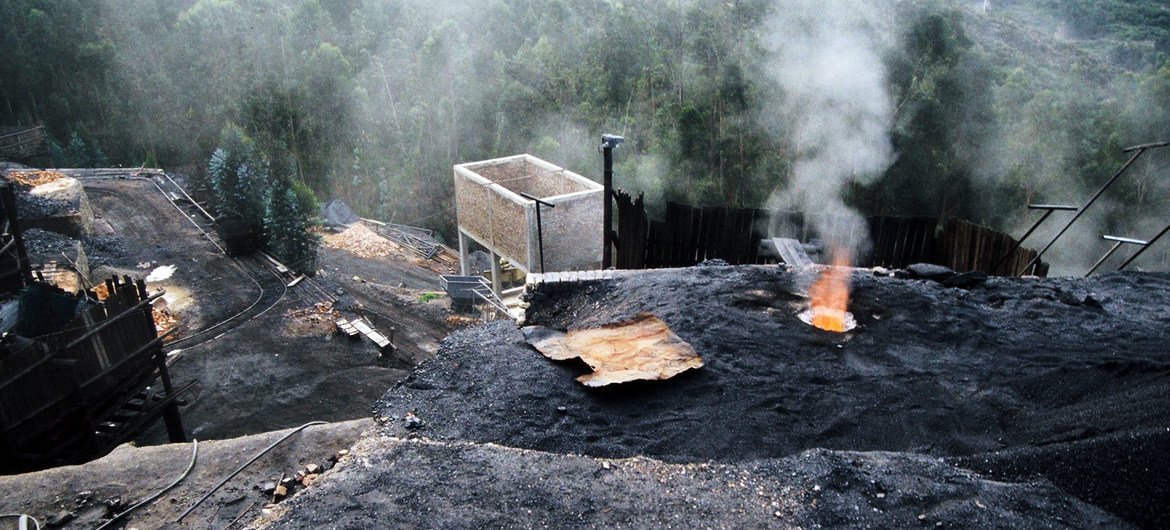
Although the globe needs a six per cent cut in fossil fuels to avoid the worst of global warming, coal mine production is expected to increase by ii per cent.
Inger Andersen, the head of the United nations Environment Progarmme (UNEP) agreed that protecting and strengthening nature, and letting nature practice its task, are vital to staving off catastrophe.
"We can't go on taking the hits and treating the wounds. Presently those wounds will be as well deep, besides catastrophic, to heal, she said during a press conference in Geneva on the launch of the IPCC study.
Ms. Andersen said that the best way to "We need to soften and slow the blows by cutting greenhouse gas emissions. But we also need to absorber the blows by picking up our efforts to adapt to climate change – which have been too weak for too long.
The best fashion to exercise this is to "soften the blow" is to permit nature do the job information technology spent millions of years perfecting. Absorbing and channelling rainwater and surging waves. Maintaining biodiversity and balance in soils so that diverse plants can grow. Providing cooling shade under leafy canopies.
"We need big-scale ecosystem restoration from bounding main to mountaintop – including through like-minded to offset negotiations on a global plastic pollution understanding at the 5th UN Environment Assembly," which opened today in Nairobi.
She also spotlighted the need to bring nature into baking hot cities to keep them cool. "Nosotros need to conserve mangroves, coral reefs and nature's other defences. Nosotros need to protect and restore wetlands for nature and incorporate wetlands in our cities."
Cities: Hotspots of climate risks; crucial to the solution
The written report provides a detailed assessment of climate change impacts, risks and adaptation in cities, and urban areas, where more than half the globe's population lives.
"Together, growing urbanization and climate modify create complex risks, especially for those cities that already feel poorly planned urban growth, high levels of poverty and unemployment, and a lack of bones services," Ms. Roberts said.
"But cities too provide opportunities for climate action – green buildings, reliable supplies of clean water and renewable energy, and sustainable transport systems that connect urban and rural areas tin all lead to a more than inclusive, fairer society."
Rapidly closing window for action
Overall, the report, which provides extensive regional information to enable Climate Resilient Evolution, underlines the urgency for climate action, focusing on equity and justice.
Acceptable funding, applied science transfer, political commitment and partnership lead to more constructive climatic change accommodation and emissions reductions.
"The scientific evidence is unequivocal: climatic change is a threat to human wellbeing and the wellness of the planet. Whatever further delay in concerted global action will miss a brief and chop-chop closing window to secure a liveable time to come," said Hans-Otto Pörtner.
About the IPCC
The Intergovernmental Panel on Climate change (IPCC) is the UN trunk for assessing the science related to climate change. It was established by the Un Environment Programme (UNEP) and the World Meteorological Organization (WMO) in 1988 to provide political leaders with periodic scientific assessments concerning climatic change, its implications and risks, also as to put forward accommodation and mitigation strategies.
In the same year the UN General Associates endorsed the action by the WMO and UNEP in jointly establishing the IPCC. It has 195 fellow member states.
Thousands of people from all over the world contribute to the work of the IPCC. For the cess reports, IPCC scientists volunteer their time to assess the thousands of scientific papers published each year to provide a comprehensive summary of what is known well-nigh the drivers of climate change, its impacts and future risks, and how adaptation and mitigation tin reduce those risks.
Source: https://news.un.org/en/story/2022/02/1112852
0 Response to "Make America Green Again Healthy Planet"
Post a Comment